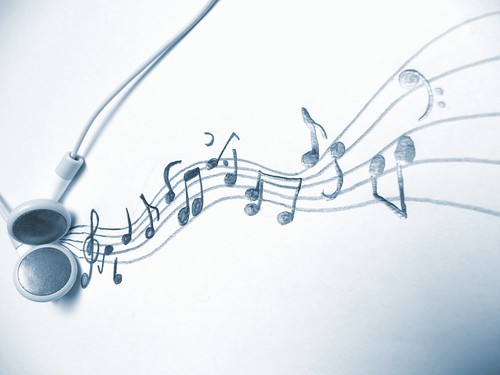
Music - an art for itself - Headphones and music notes / musical notation system, a photo by photosteve101 on Flickr.
Did you know that you can use music as a type of therapy? And did you know that you probably use it already? While there is a difference between professional musical therapy and personal self-made therapy, the results are the same.
Professional musical therapy is defined as: “The clinical and evidence-based use of music interventions to accomplish individualized goals within a therapeutic relationship by a credentialed professional who has completed an approved music therapy program.” That’s a lot of big words right? Well essentially it’s saying that you use a program made by someone with a college degree to help you accomplish what you want to do.
Personal music therapy is well personal. Have you ever been driving and turned on the radio, or listened to one song over and over again because it makes you feel better? Well if you have then you’ve used music therapy already!
Music therapy is simple yet effective. Its cost ranges from almost nothing, to thousands and thousands of dollars, depending upon which type of music therapy you use. Regardless of whether you use professional music therapy or personal music therapy there are five ways that have been scientifically proven to give you results.
First you have the option to create your own music. You improvise without rules or restraint and express yourself through what you create. Does that sound familiar? It should. Nearly everyone has messed around on the piano or guitar at some point in their life. This is a type of music therapy.
Second, you can re-create music that has already been made. People get up every day and play their instruments. Why? Well there are many reasons but those who persist in doing this do it to feel better. They play Mozart or One Republic, something that has meaning to them, and this releases their emotions in a way that cannot be done anywhere else.
Thirdly, you can compose a song. This is different from the first option because you actually create something you can play again, and have the potential for others to play it as well. This can include writing the music, lyrics or audio tapes.
The fourth option is in simply listening to the music and responding to what you feel as you listen to it. For example if you’re listening to jazz you might draw how you feel or while listening to classical music you might do meditation poses or exercises.
Fifth and final, is simply to talk about music and how it affects you. Do you ever talk about music with your friends? Do you suggest songs to each other and tell your friends how a certain song made you feel? Well there you go simple music therapy that hasn’t cost you a dime.
As a general rule of thumb most people provide themselves with personal music therapy every day without realizing it. But let’s not forget professional music therapy. Sessions of Music Therapy can benefit people who have:
-Drug and alcohol programs
-Alzheimer’s disease
-Brain injuries
-Physical Disabilities
-Development or learning Disabilities
-And mothers in labor
That’s quite the list don’t you agree? You can take group sessions with other people or you can take individualized sessions. And it’s very possible there are many facilities near you to provide help. Just go to the American Music Therapy Association website at http://www.musictherapy.org/about/ to get started.
Music Therapy is powerful. And it’s right on our door step. Let’s take advantage of it!
Pictures courtsey of photosteve101. To see more of his work please visit: http://www.flickr.com/photos/42931449@N07/5771025070/
Sources
http://www.temple.edu/musictherapy/home/program/faq.htm#a
http://www.musictherapy.org/about/musictherapy/
http://www.musictherapy.org/faq/#40

No comments:
Post a Comment